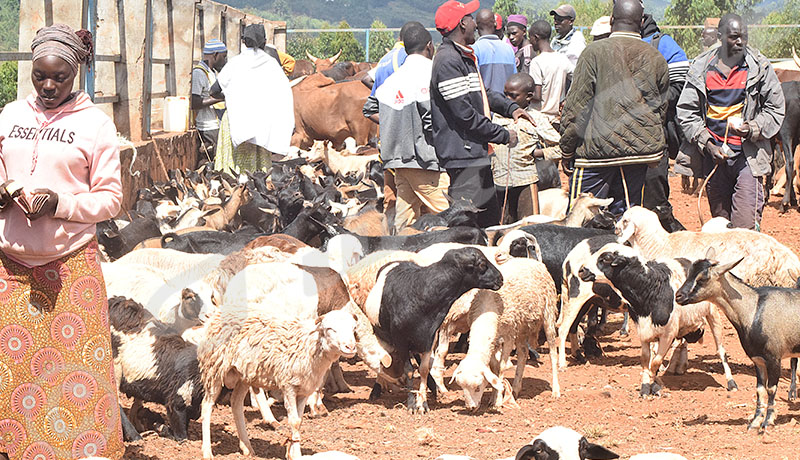
The Rutegama cattle market is experiencing significantly low sales volumes coupled with high prices ahead of the Aïd el-Hadj festival, as observed on Monday, May 25, 2026. This situation presents a considerable challenge for buyers and sellers alike as they prepare for the important religious observance. The market, a key trading hub for livestock, typically sees a substantial increase in activity leading up to the festival, but current conditions indicate a pronounced slowdown. This year, the Rutegama cattle market is notably characterized by both low sales and elevated prices, creating a difficult environment for all participants. The usual pre-festival rush, which often brings a vibrant atmosphere and brisk trade to the market, is conspicuously absent, signaling a departure from traditional patterns.
Soaring Prices Deter Buyers
A medium-sized goat or sheep at the Rutegama market currently costs between 300,000 and 400,000 Fbu. These prohibitive prices are heavily impacted by inflation and global economic difficulties, according to market observers. Buyers are facing significant financial strain as they attempt to acquire livestock for the upcoming Aïd el-Hadj festival. The elevated cost of animals is directly contributing to the observed slump in sales volume at the market, making it increasingly difficult for sellers to move their stock. This economic pressure is making it difficult for many families to observe traditional practices associated with the festival, which often involves the sacrifice of an animal. The market's usual pre-festival bustling activity has been notably subdued due to these financial hurdles, with many potential purchasers finding the prices beyond their reach. The high price point for even a medium-sized animal represents a substantial portion of many families' incomes, forcing difficult decisions regarding their participation in the religious observance.
Economic Hardship Impacts Faithful
Speculation regarding livestock prices has reached dizzying heights, according to market reports from Rutegama. This surge in speculative activity contributes to the already inflated costs observed at the market, creating an artificial upward pressure on prices that further alienates potential buyers. Current conditions indicate that this year's Aïd el-Hadj will not resemble previous observances, a sentiment widely shared among market participants and the faithful. The significant economic hardship faced by many potential buyers, coupled with the high prices of sacrificial animals, is expected to alter traditional festival practices, leading to a more subdued celebration for many. The market's reduced activity reflects a broader financial strain on families preparing for the religious holiday, suggesting a departure from the usual pre-festival bustle and purchasing patterns. For the majority of faithful, such an expense is simply impossible, transforming a customary act of devotion into an unattainable luxury. This reality shows the depth of the economic challenges impacting the community.
Seller's Dilemma and Buyer's Reality
A bull at the Rutegama market is proving difficult to sell, with prices ranging between 2,000,000 and 3,000,000 Fbu. This reflects a broader trend of diminished purchasing power among potential buyers, who are increasingly unable to afford larger, more expensive animals. The current economic climate necessitates "forced sobriety and refusal of waste," according to market observers, noting a shift in consumer behavior. This sentiment notes a shift in consumer behavior, where buyers are prioritizing essential purchases over discretionary spending, even for religious observances. The high cost of larger animals, combined with a general need for financial restraint, further contributes to the slow sales volume observed at the market ahead of the Aïd el-Hadj festival. Sellers, therefore, find themselves in a dilemma, holding stock that is priced out of the reach of most customers, while buyers are forced to reconsider their traditional festival plans due to financial constraints. The inability to sell larger animals at these price points indicates a significant disconnect between seller expectations and buyer capabilities in the current market.
Reflections on Sacrifice and Piety
For the majority of faithful, such an expense has become impossible. The sacrifice of an entire animal, a traditional practice for Aïd el-Hadj, is now considered a luxury of another era for the middle class, a stark reflection of the economic downturn. This year's Aïd el-Hadj will not resemble previous ones, as many families will be unable to afford the customary animal sacrifice. This situation forces a re-evaluation of how piety is expressed and observed during the festival, with an emphasis on communal sharing or alternative forms of commemoration. The prevailing sentiment among market observers is that the time is for forced sobriety and refusal of waste, urging prudence in financial matters. This perspective suggests a broader societal adaptation to current economic realities, where traditional expenditures, even those with religious significance, are being curtailed. The dream of performing the full animal sacrifice, once a widespread aspiration, is now out of reach for a significant portion of the population, leading to a more modest observance of the holy day.