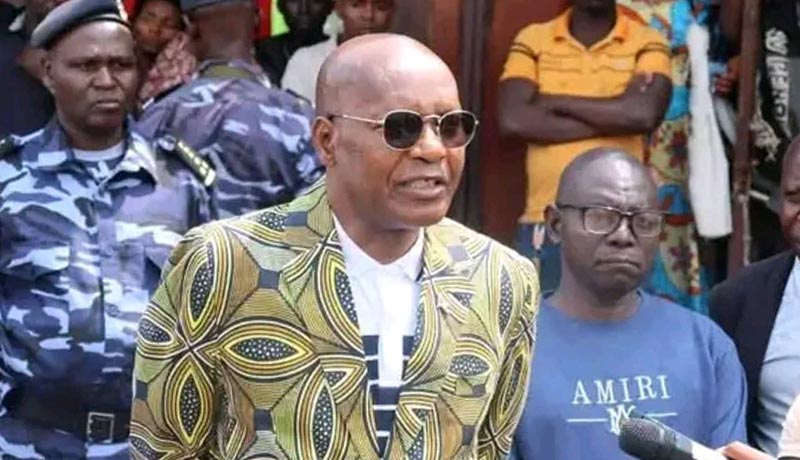
The Supreme Court on Thursday adjourned the trial between Agathon Rwasa and Nestor Girukwishaka concerning the leadership of the National Congress for Liberty (CNL). This significant legal development marks a key juncture in the protracted dispute over the party's direction. The court's decision in this high-stakes case is now expected within 60 days, a timeframe eagerly awaited by political observers and party members alike. This ruling comes as Burundi approaches its 2027 presidential election, which is scheduled for that year, making the resolution of the CNL's internal conflict particularly timely. The outcome of the trial could significantly impact the CNL's role in the upcoming electoral cycle, potentially reshaping the country's political landscape and the dynamics of opposition politics.
Details of the Supreme Court Hearing
The Supreme Court in Bujumbura, Burundi, convened for the third hearing in the leadership dispute between Agathon Rwasa and Nestor Girukwishaka. This was the third hearing in the trial, showing the complexity and persistence of the legal battle. The proceedings were held in the capital city, marking another stage in the high-profile case that has captured national attention. Agathon Rwasa attended the hearing in person, according to reports from the court, demonstrating his direct engagement with the judicial process. Nestor Girukwishaka, the other party in the dispute, was represented by his lawyer, who presented his defense before the justices. The court heard arguments from both sides as it continued to deliberate on the party's leadership, meticulously reviewing the evidence and legal submissions presented by the respective legal teams. The judicial process has been closely watched, given the CNL's prominence as a political force in Burundi.
Roots of the CNL Leadership Conflict
The conflict over the leadership of the National Congress for Liberty (CNL) originated in March 2023 with an extraordinary congress held in Ngozi. This event served as the catalyst for the current legal battle. During this congress, delegates elected Nestor Girukwishaka to lead the CNL for a five-year term, a move that was immediately contested by Agathon Rwasa and his supporters. The proceedings and their outcomes were subsequently confirmed by the then Burundian Minister of the Interior, Martin Niteretse. Minister Niteretse officially recognized the resolutions passed at the Ngozi congress, thereby endorsing the leadership change within the party. This confirmation from the Ministry of the Interior formalized Girukwishaka's claim to the party's helm, setting the stage for the ongoing legal challenge that has now reached the Supreme Court. The recognition by the minister showed the government's acknowledgment of the new leadership structure established at the extraordinary gathering, further entrenching the dispute.
Political Ramifications and Past Challenges
The Independent National Electoral Commission (CENI) rejected Agathon Rwasa's candidacy for the June 2025 legislative and district elections. Mr. Rwasa had sought to run under the Burundi Bwa Bose coalition banner, a move intended to consolidate opposition efforts. The rejection marks a significant political hurdle for Mr. Rwasa, who has been a prominent figure in Burundian politics and a long-standing opposition leader. His exclusion from the upcoming elections could influence the broader political landscape, particularly given the ongoing leadership dispute within the National Congress for Liberty (CNL). This decision by CENI notes the challenges faced by opposition figures in Burundi's political environment. The Supreme Court's impending verdict on the CNL's leadership is anticipated to further shape the party's future participation and influence in national elections, potentially determining its ability to field candidates and mobilize support effectively.
Anticipating the Verdict's Impact
The Supreme Court's impending decision on the leadership of the National Congress for Liberty (CNL) is expected to significantly influence the party's trajectory and its role in Burundi's political future. A definitive ruling will clarify who legitimately leads the CNL, thereby impacting its organizational structure, strategic direction, and public image. The verdict could reshape the CNL's role ahead of Burundi's 2027 presidential election, determining whether it can present a unified front or if internal divisions will continue to hamper its effectiveness. The resolution of this leadership dispute is key not only for the CNL but also for the broader political landscape of Burundi, particularly in the run-up to significant electoral contests.