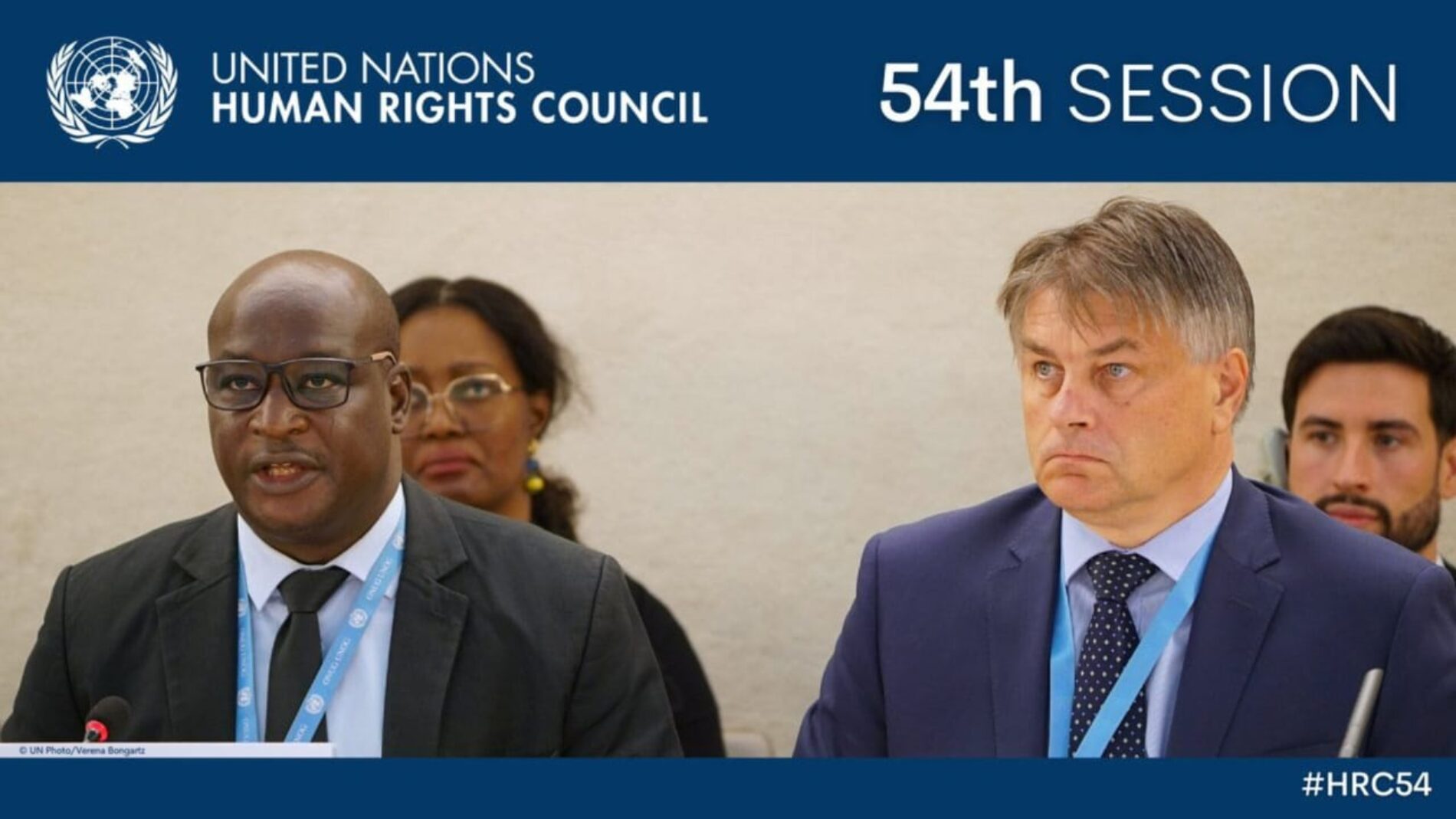
Fortuné Gaëtan Zongo, the UN Special Rapporteur on the situation of human rights in Burundi, presented his findings at the 72nd session of the UN Human Rights Council in Geneva. He stated that no structural improvement in human rights has been observed in Burundi since April 2015, despite some ad-hoc measures by authorities. This assessment shows the deep human rights crisis that Burundi has been experiencing since April 2015. The Burundian government, however, rejected the Special Rapporteur's conclusions, denouncing the mechanism as "hostile" and "politicized."
Mr. Zongo's mandate, created in October 2021 and renewed in 2025, is one of monitoring, dialogue, and accompaniment, not "a mandate of accusation nor condemnation." This specific focus on engagement and support aims to foster improvements rather than solely assign blame. He emphasized his availability for constructive dialogue with the Burundian government, stating, "Depuis ma nomination, je demeure disponible pour engager un dialogue constructif avec le gouvernement burundais sous toute forme qu’il jugera appropriée." He also noted the lack of accountability for past violations, noting, "Aucune enquête sérieuse n’a été menée. Aucune responsabilité n’a été établie. Aucune justice n’a été rendue." These critical observations point to systemic issues that continue to challenge the rule of law and justice in the country. He further articulated the human impact of these conditions, stating, "Je pense au paysan sur sa colline, à la jeune femme qui attend des soins, aux familles qui cherchent leurs proches disparus. C’est le peuple burundais, en quête de justice, que ce Conseil ne peut abandonner." This plea shows the profound human cost of the ongoing human rights situation and the urgent need for international attention and action.
Deteriorating Rights Landscape
The 2025 legislative and communal elections, which saw the ruling CNDD-FDD party win 96.5% of the vote, occurred in an environment characterized by intimidation, arbitrary arrests, and restrictions on fundamental freedoms. This climate of fear and suppression significantly impacted the electoral process, raising questions about the fairness and legitimacy of the results. Reports indicate that the Imbonerakure, the youth league of the CNDD-FDD, is undergoing paramilitary training in several provinces, raising concerns about potential violence ahead of the 2027 presidential election. Such training activities by a political party's youth wing often precede periods of increased political tension and can contribute to a climate of instability.
Journalists, bloggers, and human rights defenders in Burundi continue to face prosecution under penal provisions for alleged offenses such as 'infringing the territorial integrity of the nation' or 'disseminating false information'. These legal actions are frequently perceived as attempts to silence dissent and restrict freedom of expression, creating a chilling effect on independent reporting and advocacy. The independence of the judiciary is also reported to be severely compromised, systematically impacting due process and the fair administration of justice. This lack of judicial autonomy undermines the ability of citizens to seek redress for human rights violations and erodes public trust in legal institutions.
Information collected indicates that over 400 people have been killed and more than 200 individuals have been victims of enforced disappearances since 2020. These figures highlight a disturbing pattern of violence and impunity, contributing to widespread fear and insecurity among the population. A joint statement issued on September 1, 2025, by several UN special procedures documented 605 extrajudicial executions, 892 arbitrary detentions, 62 cases of torture, and 200 cases of sexual violence. These detailed statistics from multiple UN sources further corroborate the severity and breadth of human rights abuses occurring in Burundi. The returns of Burundian refugees from Tanzania have accelerated since early 2025, with credible information suggesting that refugees are being pressured to accept repatriation. This raises concerns about the voluntariness and safety of these returns, especially given the persistent human rights challenges within Burundi.
Economic and Social Hardship
Burundi continues to face significant economic challenges, with inflation remaining substantially higher than regional averages. Inflation in the country reached a peak of 45.5% in April 2025. It subsequently measured 20.8% in May 2026, which is more than double the average rate observed across the East African Community. These persistent economic pressures contribute to widespread hardship, eroding purchasing power and making essential goods and services unaffordable for many. The high inflation rates disproportionately affect vulnerable populations, exacerbating existing inequalities.
Chronic fuel shortages are also a major concern, disrupting essential services and the broader economy. These shortages affect transportation networks, impede the delivery of healthcare services, and hinder various economic activities across the country. The scarcity of fuel creates ripple effects throughout the economy, impacting agricultural production, trade, and daily life. The economic strain is particularly acute for the majority of the population, as over 70% of Burundians currently live below the poverty line. This high poverty rate shows the severe socio-economic difficulties faced by many citizens, making them more vulnerable to human rights abuses and less able to access basic necessities. The combination of high inflation, fuel shortages, and widespread poverty presents a formidable challenge to stability and human well-being in Burundi.
In light of the ongoing challenges, international donors have been called upon to mobilize $82 million. This funding is intended to support a joint repatriation and reintegration plan, aimed at assisting Burundian refugees returning to the country. The initiative seeks to provide necessary resources for their safe return and successful re-establishment within Burundi, addressing some of the critical humanitarian needs linked to displacement. This financial support is key for managing the complex process of refugee returns and ensuring that those who come back have the means to rebuild their lives.
Government Response and International Views
The Special Rapporteur, Fortuné Gaëtan Zongo, acknowledged the provisional release of several detainees, including journalist Sandra Muhoza, Kenny Claude Nduwimana, and former Prime Minister Alain-Guillaume Bunyoni. While these releases are a positive step, Mr. Zongo emphasized that they represent ad-hoc measures rather than structural improvements in human rights. Burundi's National Independent Human Rights Commission (CNIDH) acknowledged existing challenges within the country but commended the government's efforts. The CNIDH noted judicial reforms and measures that have reportedly reduced the prison population by 14%. This suggests a recognition of issues by a national body, coupled with an endorsement of government actions.
Separately, 32 political parties in Burundi expressed their commitment on May 15, 2026, to ensuring a transparent and peaceful presidential election in 2027. This broad commitment from various political actors indicates a shared desire, at least publicly, to uphold democratic principles in the upcoming electoral cycle.
Internationally, the European Union, along with the Benelux countries and the Nordic and Baltic states, reaffirmed their support for the Special Rapporteur's mandate. These nations also called for Burundi to reopen the Office of the United Nations High Commissioner for Human Rights (OHCHR) office within its borders. This unified stance from a significant bloc of international partners shows the importance they place on human rights monitoring and access for UN bodies. The reopening of the OHCHR office would provide a key on-the-ground presence for human rights observation and technical cooperation.
Conversely, some nations offered a different perspective on the mandate. Venezuela, South Sudan, and the Democratic Republic of Congo advocated for the termination of the specific mandate for Burundi. These countries expressed a preference for dialogue and technical cooperation as the appropriate approach to addressing human rights issues in Burundi, suggesting that a special rapporteur's mandate is seen by them as overly interventionist or politicized. This divergence in international opinion notes the ongoing debate within the UN Human Rights Council regarding the most effective mechanisms for promoting human rights in specific country contexts.