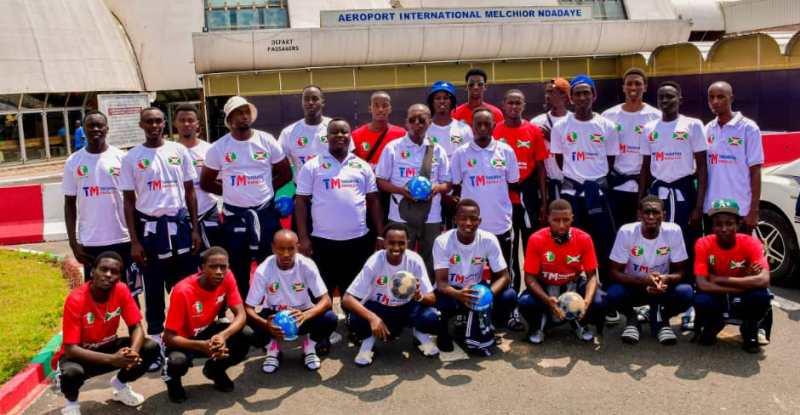
Burundi's U18 and U20 national handball teams recently participated in the 2026 IHF Challenge Trophy in Ethiopia, an event designed to foster talent and competitive growth across the region. The participation provided both junior teams with invaluable exposure to international competition, marking a significant step for the country's handball development on the global stage. The tournament offered a key platform for the athletes to gain valuable experience against regional opponents, enhancing their skills and tactical understanding in a high-stakes environment. This engagement is considered vital for the long-term progression of handball within Burundi, allowing young players to test their abilities against a diverse range of competitors.
U18 Team's Strong Performance
Burundi's U18 national team demonstrated a remarkably strong campaign at the IHF Challenge Trophy, ultimately reaching the final match after a series of undefeated performances that captivated observers. The team had not experienced any losses in its five preceding games leading up to the championship decider, showcasing a consistent level of high performance and tactical discipline. Their impressive run concluded with a narrow defeat in the final, where they lost by a single goal, a testament to the intensely competitive nature of the championship match. This performance marked a significant achievement for the young athletes, securing a second-place ranking in the competition and showcasing their competitive spirit and skill on the international stage. The U18 team's ability to remain unbeaten through multiple rounds showed their potential and the effectiveness of their preparation.
U20 Team's Competitive Finish
Burundi's U20 national handball team finished fifth in the competition, a result that reflects their competitive spirit within a challenging regional field. The team's participation in the IHF Challenge Trophy provided its players with essential international exposure, contributing significantly to their development against regional adversaries. Competing in such events is considered key for younger athletes to refine their skills, gain tactical experience, and adapt to the pressures of international play. The tournament format allowed the Burundian U20 squad to play multiple matches, offering practical application of their training and an opportunity to implement various strategies. Finishing fifth among the participating nations indicates a competitive showing by the Burundian team in a regional context, noting their capability to contend with established teams. The experience gained is expected to benefit the players' individual growth and the overall progression of handball within Burundi, laying a foundation for future success.
Future Training and Development
Burundi's U18 national team achieved a second-place ranking in the competition, marking a significant outcome for their participation and signalling a promising future for the sport in the nation. The team's performance shows the potential for future development within the sport in Burundi, providing a strong foundation upon which to build. Moving forward, Burundi's handball teams plan to implement regular training regimens, recognizing the importance of sustained effort in athlete development. This ongoing training aims to enhance the teams' performance, preparing them meticulously for upcoming regional and world competitions where they aspire to achieve even greater success. The consistent practice is intended to build on the experience gained at events like the IHF Challenge Trophy, fostering continuous improvement among the athletes and strengthening their competitive capabilities on an international level. This commitment to regular training aligns with the goal of elevating Burundi's presence in international handball.
Referees Under Scrutiny
The officiating during the tournament drew attention, prompting discussions among participants regarding the consistency and fairness of certain decisions. Eric Nkurunziza, coach of the Burundi U18 team, indicated that his team faced challenges stemming from specific referee decisions made during critical moments of their matches. Olivier Nishirimbere, coach of the Burundi U20 team, also noted concerns regarding the fairness of certain calls during matches in Ethiopia, suggesting that these decisions may have impacted the flow and outcome of games. These observations from both coaching staffs show a shared sentiment regarding the perceived quality of officiating throughout the competition.