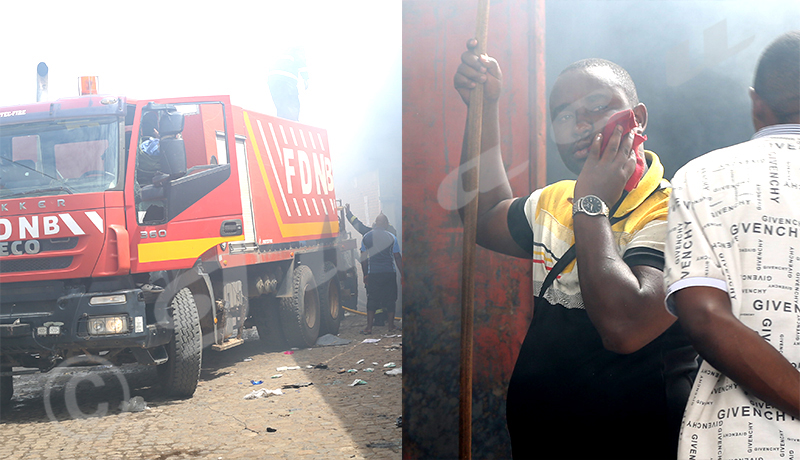
A fire erupted in Burundi's Kinama market on Thursday, April 7, 2026, around 8:30 AM, prompting a visit from Bujumbura province Governor Aloys Ndayikengurukiye to assess the damage. The blaze originated in the market's phone sales and repair sector, subsequently spreading to sections selling clothing, utensils, and other household items. Officials confirmed the fire caused the destruction of goods valued at several million Burundian francs. Governor Ndayikengurukiye's site visit aimed to evaluate the extent of the impact on traders and the market infrastructure, showing the severity of the incident and its potential economic repercussions for the community.
Firefighting Efforts and Initial Response
The inferno, which began in the morning hours, quickly overwhelmed initial attempts to contain it. Local residents initially attempted to control the fire using extinguishers before the arrival of professional firefighters, demonstrating the immediate community response to the crisis. Firefighting crews continued to work on bringing the blaze under control until approximately 12 PM, battling the flames for several hours. These dedicated efforts were significantly supported by anti-fire trucks dispatched from Melchior-Ndadaye International Airport, as well as units from the army and civil protection, noting a multi-agency response to the emergency.
Despite the coordinated efforts, firefighters encountered significant difficulties in their intervention due to the narrowness of the market's internal spaces. These structural constraints impeded the movement of equipment and personnel, complicating access to the heart of the blaze and prolonging the containment process. This challenge immediately brought into question the market's design and adherence to safety standards.
Faustin Ndikumana, a civil society activist and national director of the Centre for Partnership for the Promotion of Peace and Human Rights (PARCEM), was quick to question whether the market's construction complied with fire prevention standards, particularly concerning access for fire trucks. "Il y a des normes et des critères qui doivent être observés avec rigueur," Ndikumana stated, stressing the importance of strict adherence to building codes. He added that without such adherence, "La maîtrise devient hypothétique," implying that controlling such incidents becomes exceedingly difficult, if not impossible. He concluded, "Des leçons devraient être tirées pour qu’il n’y ait plus jamais ça," emphasizing the urgent need for preventative measures and improved infrastructure planning to avert future disasters. Gabriel Rufyiri, Chairman of the Anti-Corruption and Economic Malpractice Observatory (OLUCOME), commented on the recurring nature of such incidents. "démontre qu’il y a quelque chose qui ne va pas," Rufyiri said, referring to the frequent market fires that plague the region. He also noted that "Ce manque de prévention complique également la protection des citoyens et de leurs biens" and noted that credible investigations have never clearly established the causes of these incidents, fostering a cycle of recurrence.
Echoes of Past Disasters
The recent Kinama market fire echoes similar incidents across Burundi, painting a grim picture of repeated infrastructure failures and inadequate safety protocols. This latest blaze follows a significant fire at the Kamenge market, located near Kinama, which occurred just three years prior. That earlier fire, which devastated the Kamenge market on October 3, 2020, resulted in damages estimated at a staggering 4 billion Burundian francs, showing the immense financial and social cost of these recurring events.
Gabriel Rufyiri, Chairman of the Anti-Corruption and Economic Malpractice Observatory (OLUCOME), pointed to a consistent pattern of such disasters, mentioning past fires in the central market of Bujumbura in January 2013, as well as in the markets of Jabe, Kamenge again, Ngozi, and Kayanza. The recurrence of these events, impacting multiple key economic hubs across the country, "démontre qu’il y a quelque chose qui ne va pas," Rufyiri stated, strongly suggesting systemic issues rather than isolated accidents.
Rufyiri also noted a widespread problem with non-compliance with safety standards in these markets, specifically noting narrow access routes that severely impede emergency responses, a critical factor observed during the Kinama fire. He observed that "Ce manque de prévention complique également la protection des citoyens et de leurs biens," indicating that the absence of proactive safety measures directly jeopardizes both lives and livelihoods. Faustin Ndikumana, a civil society activist and national director of PARCEM, similarly denounced what he termed the "anarchic installation" of market stands. He argued that this uncontrolled and often haphazard arrangement of stalls leads to severe overcrowding, which not only creates hazardous conditions but also facilitates the rapid spread of fires once they ignite, making containment exceedingly difficult for emergency services.
Ndikumana emphasized the necessity of adhering to established safety protocols and construction norms. "Il y a des normes et des critères qui doivent être observés avec rigueur," he stated, referring to both construction and operational standards designed to mitigate fire risks. Without strict adherence to these key guidelines, he cautioned, controlling such incidents "La maîtrise devient hypothétique," meaning effective fire suppression becomes a near impossibility. Ndikumana concluded that "Des leçons devraient être tirées pour qu’il n’y ait plus jamais ça," showing the profound need for preventative measures, rigorous enforcement of safety standards, and improved infrastructure planning to break this destructive cycle. The repeated nature of these market fires, therefore, is not merely a series of unfortunate accidents but a symptom of deeper, unaddressed structural and regulatory deficiencies.
Critiques of Prevention and Oversight
Gabriel Rufyiri, president of the Anti-Corruption and Economic Malpractice Observatory (OLUCOME), articulated a fundamental critique, stating that the primary issue is the absence of a genuine prevention culture within public institutions. Rufyiri told reporters, "Le principal problème réside dans l’absence d’une véritable culture de prévention," suggesting a systemic failure to prioritize proactive safety measures and risk mitigation. He further asserted that generalized impunity contributes significantly to the recurring market disasters across Burundi, arguing that the frequency of these incidents "démontre qu’il y a quelque chose qui ne va pas" in the accountability mechanisms. Rufyiri also noted that "Ce manque de prévention complique également la protection des citoyens et de leurs biens," directly linking the lack of preventative action to the vulnerability of the populace and their economic assets. He has consistently pointed out that credible investigations have never clearly established the causes of these incidents, thereby perpetuating a cycle where lessons are not learned and accountability remains elusive.
Faustin Ndikumana, national director of the Centre for Partnership for the Promotion of Peace and Human Rights (PARCEM), indicated that these repeated fires reflect deep flaws in how public infrastructure and associated risks are managed across the country. Ndikumana pointed to insufficient daily management of markets by municipal services or administration companies as a significant contributing factor. This lack of consistent oversight, he suggested, allows safety lapses to persist and accumulate, increasing the likelihood and severity of future incidents. He reiterated the necessity of adhering to established safety protocols, stating, "Il y a des normes et des critères qui doivent être observés avec rigueur," emphasizing that these standards are not optional but essential for public safety. Without strict adherence to these guidelines, he cautioned, controlling such incidents becomes "hypothétique," making effective emergency response an uncertain prospect.
Ndikumana also criticized the inadequacy of rescue services, noting that fire trucks often intervene late, a problem exacerbated by the narrow access routes in many markets. This delay in response, he argued, allows fires to escalate rapidly, causing more extensive damage before professional help can arrive effectively. He concluded that "Des leçons devraient être tirées pour qu’il n’y ait plus jamais ça," showing the urgent need for preventative measures and improved infrastructure, including better access for emergency vehicles. Ndikumana further deplored the lack of in-depth investigations following these fires, suggesting that the absence of clear accountability for past incidents perpetuates the cycle of disasters and prevents the implementation of necessary reforms. He also specifically denounced the anarchic installation of stands in markets, which leads to overcrowding and facilitates the rapid spread of fires, compounding the challenges faced by firefighters.
Insurance and Accountability Questions
The aftermath of the Kinama market fire has also brought critical questions about insurance coverage and accountability to the forefront. Bujumbura province Governor Aloys Ndayikengurukiye stated that the Ntahangwa commune had subscribed to an insurance policy with the company Gico, offering a glimmer of hope for some form of financial recovery. However, Gabriel Rufyiri, Chairman of the Anti-Corruption and Economic Malpractice Observatory (OLUCOME), quickly specified that this market insurance might cover only the communal premises, not the individual affected merchants. Rufyiri noted that such an arrangement "démontre qu’il y a quelque chose qui ne va pas" regarding the protection of traders' livelihoods, noting a significant gap in the safety net for those directly impacted by the blaze.
He further asserted that "Ce manque de prévention complique également la protection des citoyens et de leurs biens," reinforcing his broader critique of systemic failures. This distinction raises profound questions about the financial recourse available to vendors whose goods, often their entire livelihood, were destroyed in the blaze. If individual traders are not covered, the economic devastation for hundreds, if not thousands, of families could be catastrophic, pushing them deeper into poverty. The lack of full insurance for individual merchants, combined with the recurring nature of these fires and the absence of thorough investigations into their causes, points to a pressing need for a re-evaluation of market management, safety regulations, and financial protection mechanisms in Burundi. The Kinama market fire, therefore, serves as a stark reminder of the vulnerabilities faced by traders and the critical need for strong, inclusive, and preventative policies to safeguard their assets and ensure economic stability.