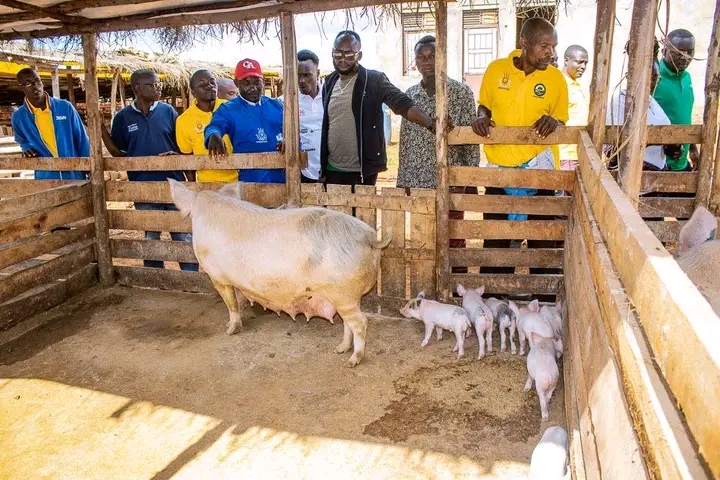
Jean Séverin Sinzobatohana, the provincial director of Environment, Agriculture, and Livestock in Gitega, recently visited model farmers and breeders in the Shombo commune. His visit, occurring before June 17, 2026, aimed to assess progress and encourage sustainable agricultural practices. The Shombo commune is championing these methods to foster self-sufficiency and broader development within its communities. Director Sinzobatohana’s engagement shows the provincial administration's commitment to agricultural innovation and local empowerment. This initiative supports farmers in adopting techniques that enhance productivity and environmental resilience. The focus remains on sustainable growth across Gitega, benefiting local populations and contributing to the overall economic well-being of the province. The full approach taken by the provincial director notes the importance placed on agricultural advancements as a cornerstone of community prosperity.
Model Agricultural Center
The provincial director's visit included the Centre des prêtres, located on Ngugo hill in the Nyabikere zone. This center actively multiplies selected seeds of various crops and raises diverse animal species as part of its agricultural mandate. It manages over 90 hectares of land, with 60 hectares specifically dedicated to reforestation efforts and 30 hectares utilized for agricultural activities. The Centre des prêtres serves as a vital hub for agricultural innovation, demonstrating effective land management and sustainable farming practices. Its role extends beyond mere production, acting as a training ground and a source of high-quality agricultural inputs for the surrounding communities.
Among the crops multiplied at the Centre des prêtres are beans, potatoes, and corn, contributing significantly to local food security. The center has also developed irrigated agriculture to ensure sustained production even during periods of drought, addressing a critical challenge for farmers in the region. This approach supports consistent output and resilience for the community, mitigating the risks associated with unpredictable weather patterns. The strategic implementation of irrigation technology showcases a forward-thinking approach to agricultural challenges, ensuring reliable yields and supporting the livelihoods of numerous farmers. The diversified agricultural activities at the center not only enhance food availability but also promote nutritional diversity within the local diet.
The Centre des prêtres' commitment to both crop cultivation and animal husbandry provides a holistic model for integrated farming. By raising diverse animal species alongside crop multiplication, the center exemplifies how different agricultural components can mutually support each other, improving soil fertility and resource utilization. This integrated system contributes to a more resilient and sustainable agricultural ecosystem within the commune. The success of the Centre des prêtres demonstrates the potential for advanced agricultural techniques to transform local farming practices and significantly improve community self-sufficiency.
Local Agri-Entrepreneurs Shine
Agri-breeder Nkunzimana Jimmy operates in Shombo commune, managing a significant livestock operation that includes 64 pigs and 17 cattle. In addition to animal husbandry, Nkunzimana Jimmy cultivates soybeans, beans, and corn across a 28-hectare property. His agricultural endeavors are part of the local efforts to promote sustainable farming practices in the region. Nkunzimana Jimmy's integrated farm, combining substantial livestock with diverse crop cultivation, serves as a prime example of successful modern agriculture in the commune. His dedication to these practices not only ensures his own economic stability but also contributes to the local food supply chain. The scale of his operations notes the potential for individual farmers to achieve considerable productivity and efficiency through well-managed agricultural enterprises.
Another local entrepreneur, Nsengiyumva Serges, has demonstrated success in agricultural ventures. Nsengiyumva Serges earned 700,000 FBU from corn cultivation alone on a 300-are plot. His initial success with corn has led to an expansion of his operations. Nsengiyumva Serges has since expanded his agricultural activities to cover an area exceeding two hectares, diversifying his farming footprint within the commune. This expansion shows his entrepreneurial spirit and commitment to agricultural growth. His ability to generate substantial income from a relatively small plot initially demonstrates the profitability of focused, efficient farming. The subsequent expansion to over two hectares signifies a strategic investment in scaling up his production, contributing further to the commune's agricultural output and economic vitality. These examples highlight the contributions of local individuals to agricultural development and self-sufficiency initiatives in Shombo, showcasing their role as key drivers of progress.
Challenges and Future Outlook
The provincial director, Jean Séverin Sinzobatohana, commended the modern agri-breeders for their significant contributions to development, poverty reduction, job creation, and food security within the commune. Despite these successes, entrepreneurs in Shombo commune face several challenges. Agri-breeders and farmers report difficulties with rising agricultural labor costs, which impact their operational expenses. This increase in labor expenditure can significantly reduce profit margins, making it harder for farmers to invest in further improvements or expansion. Additionally, there are concerns about the insufficient supply of fertilizer, specifically Fomi, which is key for maintaining soil fertility and crop yields. The scarcity of essential inputs like Fomi poses a direct threat to agricultural productivity, potentially hindering the commune's efforts towards sustained self-sufficiency.
Addressing these challenges is seen as essential for sustaining the momentum of agricultural development and ensuring the continued self-sufficiency and growth of the commune. The provincial administration, in collaboration with local leaders, is exploring strategies to mitigate these issues, including potential subsidies for agricultural inputs or initiatives to improve labor availability and affordability. The long-term success of Shombo commune's agricultural sector hinges on effective solutions to these pressing concerns, ensuring that the remarkable progress made by model farmers and breeders can continue unhindered. This commitment to overcoming obstacles reflects a broader vision for a resilient and prosperous agricultural future for Shombo. The article was published on June 17, 2026.